CyberFreezeDev Loading
  1. Home
  2. AI glossary
  3. Large language model (LLM)

What is a large language model (LLM)?

A neural network trained on huge amounts of text to predict what comes next.

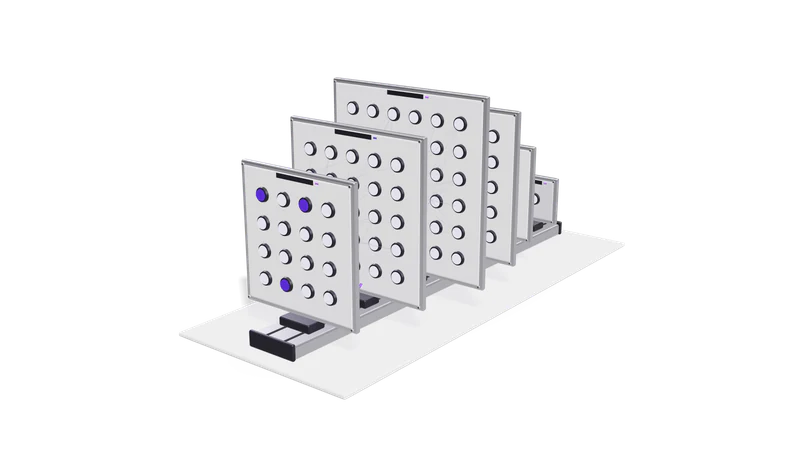
3D render of matte panels of neural network nodes, with activations lighting up layer by layer

The plain definition

An LLM predicts text one token at a time from patterns learned in billions of sentences. More parameters usually mean more ability and higher cost.

Read more about The plain definition

A large language model (LLM) is a program that has learned the statistical patterns of language from billions of sentences. Give it some text and it predicts what comes next, one token at a time. GPT, Claude, Gemini, Llama, Qwen and Mistral are all LLMs.

"Large" refers to the number of learned parameters, from a few billion in models that run on a laptop to hundreds of billions in hosted models. More parameters usually means better reasoning and more knowledge, and also more memory and cost to run.

How it works

  1. 01 Pretraining

    Reading a huge body of text, the model learns grammar, facts and reasoning patterns.

    Read more about Pretraining

    The model reads a very large text corpus and learns to predict the next token. This is where it picks up grammar, facts and patterns of reasoning.

  2. 02 Instruction tuning

    Training on good answers and human ratings teaches it to follow instructions.

    Read more about Instruction tuning

    It is then trained on examples of questions and good answers, and on human preference ratings, so it follows instructions instead of just continuing text.

  3. 03 Prompting

    You send instructions, context and a question, all inside the context window.

    Read more about Prompting

    At use time you send a prompt: instructions, context and the question. Everything has to fit in the model's context window.

  4. 04 Generation

    The model writes one token, appends it and repeats until done.

    Read more about Generation

    The model produces one token, appends it, and repeats until it finishes. This step is called inference.

Where it matters in business

Reading unstructured text

Emails, chats, contracts and tickets summarised, tagged and routed without someone reading each.

Read more about Reading unstructured text

Emails, WhatsApp messages, contracts and support tickets can be summarised, tagged and routed without someone reading each one.

Drafting

Replies, quotes, product descriptions and reports, drafted for a person to check.

Read more about Drafting

Replies, quotes, product descriptions and reports, drafted for a person to check and send.

Acting through tools

With function calling, it can look up an order or create a CRM record.

Read more about Acting through tools

With function calling, an LLM can look up an order, create a CRM record or start a workflow.

A practical example

A CA firm's LLM labels each client email, pulls out the client and period, and drafts a reply that staff approve or edit.

Read more about A practical example

A CA firm receives client queries by email all day. An LLM reads each message, labels it (GST filing, TDS, invoice copy, general), pulls the client name and period, and drafts a reply from the firm's own notes using retrieval-augmented generation. A staff member approves or edits the draft. The model does the reading and typing; the accountant keeps the judgement.

Common mistakes

Treating it as a database

Built-in knowledge is frozen and can be wrong. Pass in facts from your own data.

Read more about Treating it as a database

An LLM's built-in knowledge is frozen at its training date and can be wrong. Facts that matter should come from your own data, passed in with the prompt.

Ignoring hallucination

Models can write fluent, confident text that is false. Design around it.

Read more about Ignoring hallucination

Models can produce fluent, confident text that is false. See hallucination for how to design around it.

Picking the biggest model by default

A smaller open-weight model on your hardware often handles classification and extraction.

Read more about Picking the biggest model by default

A smaller open-weight model running on your own hardware is often enough for classification and extraction, and keeps data in house.

Questions

Is ChatGPT an LLM?

ChatGPT is an application built on top of OpenAI's GPT models, which are LLMs. The app adds a chat interface, memory features, file handling and safety layers around the model.

Can an LLM run on our own servers?

Yes. Open-weight models such as Llama, Qwen and Mistral can run on a GPU workstation or server you control, so prompts and documents never leave your network. See our private AI deployment service.

Does an LLM learn from what we type into it?

Not during normal use. The model's weights do not change when you send a prompt. Whether a hosted provider keeps your data for training is set by its terms and your account settings, so check them before sending client data.

Last updated