CyberFreezeDev Loading
  1. Home
  2. CyberFreeze Labs
  3. Local LLMs and private AI

Local LLMs and private AI: how much fits on hardware you own

We test which business tasks an open-weight model handles on an 8 GB laptop GPU.

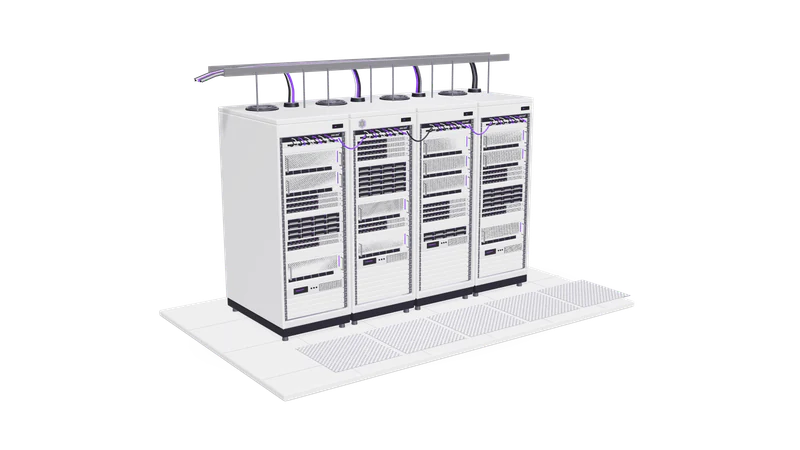
3D render of matte white server racks with violet status lights under an overhead cable tray

Question under test

Starting on one 8 GB laptop GPU: if a task works there it will work on a bigger server, and if not, we record why.

Read more about Question under test

Which everyday business tasks can a local LLM handle well enough on modest hardware you own, and where does it stop being worth it?

By local LLM we mean an open-weight model (families such as Llama, Qwen, Mistral and Gemma) running on a machine you control, with no prompt or document sent to an outside API. We deliberately start small: one laptop GPU with 8 GB of video memory. If a task works there, it will work on the workstation or server a client is more likely to buy. If it fails there, we want to know exactly why: memory, speed, or the model simply not being good enough.

The answer feeds our private AI deployment work and the hardware advice we give in GPU servers and AI hardware builds. To check whether a model fits your own card, use our VRAM calculator.

Why clients ask for local models

Three reasons clients ask us about local models, in the order we hear them.

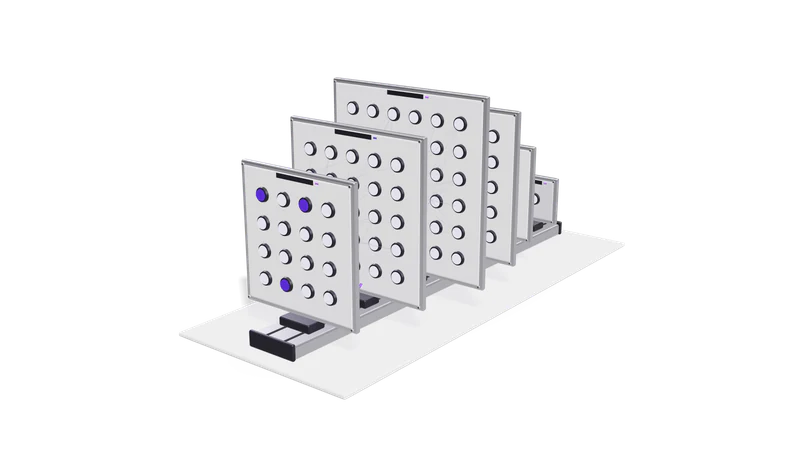
Fig. 01 Activations passing through a model, layer by layer

The data cannot leave

A model on your own server removes one data processor and one cross-border transfer.

Read more about The data cannot leave

Clinics hold patient notes, CA firms hold client books and bank statements, HR teams hold ID documents. India's Digital Personal Data Protection Act 2023 and UK GDPR both make you answerable for every processor that touches personal data. A model on your own server removes one processor and one cross-border transfer from that list.
Costs that do not scale per message

Local models cost hardware and upkeep, not tokens. Which is cheaper depends on volume.

Read more about Costs that do not scale per message

Hosted APIs bill per token. A local model costs the hardware, electricity and upkeep, whether it reads ten documents a day or ten thousand. Which is cheaper depends on volume, and we want real measurements to make that call for a client instead of guessing.

It keeps working offline

Once installed, a local model has no outside dependency, even with patchy internet.

Read more about It keeps working offline

A factory floor, a clinic with patchy internet or a field office still needs the tool to answer. A local model has no outside dependency once it is installed.

Control over the model version

A model file on your disk behaves the same next year as today.

Read more about Control over the model version

Hosted models change and get retired on the provider's schedule. A model file on your disk behaves the same next year as it does today, which matters when a workflow has been checked and signed off.

Test rig

One machine, chosen because it is the low end of what a small office might buy. Exact software versions are recorded with every result we publish.

Local LLM test rigLabs track 01
GPU
NVIDIA GeForce RTX 3070 Ti Laptop GPU
Video memory
8 GB
Operating system
Windows 11
Runtimes under test
llama.cpp, Ollama
Model formats
GGUF at 4-bit and 8-bit quantization
Model families
Llama, Qwen, Mistral, Gemma (open weights)
Network during tests
No outside API calls for the model itself
Stage
Rig and task sets fixed; no scores published yet

Scoring: speed, memory and quality together

Speed numbers alone are misleading. A fast model that returns broken JSON is useless in a workflow, so every run is scored on speed, memory and task quality together.

MetricHow we measure itWhat counts as success
Time to first tokenSeconds from sending the prompt to the first output token, at short and long prompt lengthsShort enough that a person waiting at a screen does not give up; judged per task
Generation speedOutput tokens per second, averaged over the whole task set, not the best runFast enough to clear the day's volume for that task inside working hours
Peak video memoryHighest VRAM use reported by nvidia-smi during a run, including the context cacheFits fully on the GPU with no layers spilled to system RAM
Format validityShare of outputs that parse as JSON and pass the task's schemaEvery output in the set parses; failures are retried once and logged
Task accuracyField by field comparison against answers a person wrote for each test itemMatches what a trained person would accept without edits
GroundingFor question answering over documents: does every claim cite a passage that actually contains itNo answer without a source passage; unsupported answers are counted as failures
Sustained runThe same task set looped for a long session, watching speed and GPU temperatureSpeed holds steady; no crash or slowdown from heat

Task sets: GST invoice field extraction, short answers from a fixed document set, and sorting customer messages into categories. Test items are written by us or taken from public samples.

Arithmetic first, then hypotheses

The first two points are public arithmetic and documented behaviour. The last two are our working hypotheses, not results.

Memory is set by parameters and precision

At 16-bit an 8B model needs about 16 GB; at 4-bit, roughly 4 to 5 GB.

Read more about Memory is set by parameters and precision

Weights take roughly parameters multiplied by bytes per parameter. An 8 billion parameter model at 16-bit precision needs about 16 GB just for weights, so it cannot fit on an 8 GB card. At 4-bit quantization the same model is closer to 4 to 5 GB, which leaves room for the context.

Long context costs memory too

The KV cache grows with every token, so long documents can run out of memory.

Read more about Long context costs memory too

The key and value cache grows with every token of context. A model that fits comfortably with a one page prompt can run out of memory on a forty page contract. llama.cpp can offload some layers to system RAM, but speed then drops sharply.

Hypothesis: narrow tasks are within reach

Hypothesis: a quantized 7 to 8B model with a strict schema and retrieval handles extraction and summaries.

Read more about Hypothesis: narrow tasks are within reach

We expect a quantized 7 to 8 billion parameter model, given a strict output schema and the right passages from retrieval-augmented generation, to handle extraction, classification and summaries of known document types. This is what we are testing first.

Hypothesis: open-ended reasoning still needs bigger models

Hypothesis: multi-step judgement likely needs larger models than an 8 GB card can hold.

Read more about Hypothesis: open-ended reasoning still needs bigger models

Multi-step judgement, such as reviewing an unusual contract clause, likely needs larger models than an 8 GB card can hold. Finding that boundary task by task is the point of this track.

Run plan

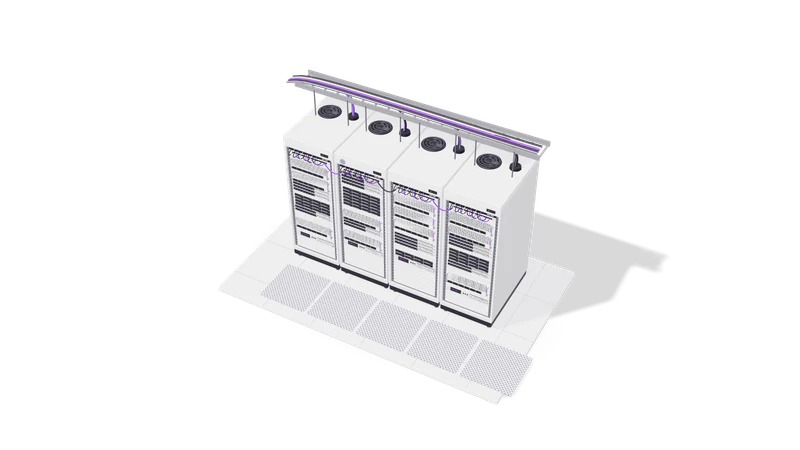
Fig. 02 High angle: racks under the overhead ladder tray
  1. 01 Baseline runs on the 8 GB rig

    Every task set at 4-bit and 8-bit, logging speed, memory, accuracy and versions.

    Read more about Baseline runs on the 8 GB rig

    Run every task set across the model families above at 4-bit and 8-bit, and record speed, memory and accuracy with versions and dates.

  2. 02 Multi-user serving

    Several staff on one local model at once, including vLLM on larger cards.

    Read more about Multi-user serving

    Test what happens when several staff use one local model at once, the realistic office case, including serving engines such as vLLM on larger cards.

  3. 03 Connect it to real workflows

    The strongest setups move into the document AI and multi-agent tracks for real work.

    Read more about Connect it to real workflows

    Feed the strongest local setups into the document AI track and the multi-agent track, where they do actual work instead of answering test prompts.

What we publish, and when

Lab notes will be published in the R&D / Labs notes section of our blog. Nothing below is a result until it appears there with its run details.

NotePublished whenWhat it contains
Method noteBefore any scoresThe question, the rig above, the three task sets, how each metric is computed and what counts as a pass
Baseline, per model familyWhen a family has finished its 4-bit and 8-bit runs on every task setTime to first token, tokens per second, peak VRAM, format validity and accuracy per task, with runtime version, model file, quantization, driver version and run date
Prompts and per-item scoresWith each baseline noteThe prompts and test items, and the score for every item, so a run can be repeated on any 8 GB card
Multi-user servingAfter the single-user baselinesThroughput and response time as concurrent users are added, with the serving engine and GPU named

Questions

Can a local LLM replace ChatGPT or Claude for my team?

For general open-ended questions, usually not on small hardware. For a defined task, such as pulling fields from invoices or sorting support messages, a local model can be good enough. This track exists to say which tasks, with measurements.

What GPU do I need to run a model on my own server?

It depends on model size, precision and how much text you send at once. As a rule of thumb from public figures, an 8 billion parameter model at 4-bit fits in 8 GB with modest context; larger models or many simultaneous users need more memory. We size this per project in GPU servers and AI hardware builds.

Does running locally make us compliant with the DPDP Act or GDPR?

No single choice makes you compliant. Running locally removes an outside processor and a data transfer, which simplifies the picture, but you still need consent, purpose limits, access control and retention rules.

Have you published benchmark numbers yet?

Not yet. We only publish numbers from runs we actually did, with the hardware, software versions and date. They will appear as lab notes in the R&D / Labs notes section of our blog.

Last updated