CyberFreezeDev Loading
  1. Home
  2. Services
  3. GST and accounting automation

GST and accounting automation for Indian businesses and CA firms

Bills read, bank lines matched and GST figures checked. A person confirms every entry.

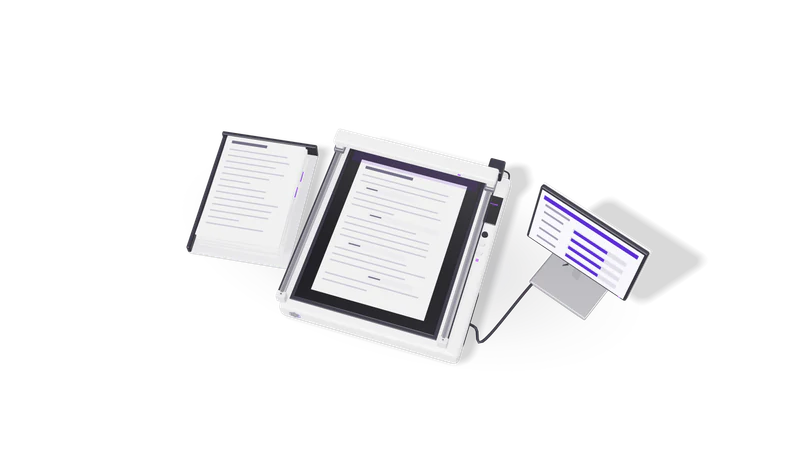
3D render of a paper stack and a scanner bed whose light bar reads fields into a record card

At a glance

GST and accounting automation
Inputs
Purchase bills (PDF, photo, email), sales invoices, bank statements (PDF, CSV, Excel), GST portal downloads
Accounting systems
TallyPrime, Fint, Zoho Books and others with an import format or API
GST coverage
GSTR-1 and IFF data, GSTR-3B summary, purchase register reconciliation against GSTR-2B
Other registers
TDS and TCS registers, customer and vendor ledgers, outstanding receivables
Control
Every entry proposed, a person confirms; audit trail on every change
Built with
Python, n8n, OCR and language models, Tally XML import

Where the hours actually go

The hours go into typing bills, ticking bank lines and booking invoices twice. We automate each step and a person confirms the result.

Read more about Where the hours actually go

In most small businesses and CA firms in India, the books are not slow because of filing. They are slow because of everything before filing: a bag of purchase bills to type in, a bank statement to tick off line by line, sales invoices raised in one tool and booked again in Tally, and a scramble before the 11th and the 20th to make GSTR-1 and GSTR-3B agree with the books.

GST and accounting automation takes those steps one at a time. Bills are read by OCR and a language model, which pulls the supplier GSTIN, invoice number, date, HSN or SAC codes, taxable value and the CGST, SGST or IGST split. Bank lines are matched to open invoices by amount, date and reference. Entries are prepared in the format your accounting system imports. Then a person reviews and confirms, because in accounting a wrong entry that nobody checked is worse than a slow one.

Our own product Fint works this way for GST return summaries. If you run a practice, see how we work with accounting and CA firms; for a quick rate check, use our GST calculator. Our glossary explains GSTR-2B reconciliation and e-invoicing and the IRN.

Built on what we learned building Fint

Fint is our own invoicing, expenses, banking and GST product for Indian businesses. The client work on this page uses the same rules.

The AI proposes, a person records

Proposed expenses, deposits and invoices wait in an Inbox until a person confirms them.

Read more about The AI proposes, a person records

In Fint an AI agent proposes expenses from bills, deposits from bank lines and draft invoices, and they land in an Inbox. Money is never recorded without a person confirming it. Client systems we build follow the same pattern.
Several books, one login

Each set of books and each GSTIN stays separate under one login.

Read more about Several books, one login

Fint holds several sets of books under one login, which is how CA firms and groups with more than one GSTIN actually work. Automations we build keep each book and each GSTIN separate.

Returns as summaries you can check

GSTR-1 and GSTR-3B summaries and TDS and TCS registers to check before filing.

Read more about Returns as summaries you can check

Fint produces GSTR-1 and GSTR-3B summaries and TDS and TCS registers from the recorded data. You file on the GST portal; the summary is what you check against.

Questions instead of guesses

An unreadable bill or unclear category raises a review query instead of a guess.

Read more about Questions instead of guesses

When a bill is unreadable or a category is unclear, Fint raises a review query rather than picking one. We design client workflows the same way.

What we automate

Purchase bill capture

Emailed or WhatsApp bills read, de-duplicated and checked for GSTIN and tax maths.

Read more about Purchase bill capture

Bills forwarded to an email address or WhatsApp number are read, checked for duplicates and validated (GSTIN format, tax maths, place of supply against the IGST or CGST and SGST split) before an entry is proposed.

Bank reconciliation

Bank lines matched to invoices, including part payments, with leftovers listed for a person.

Read more about Bank reconciliation

Statement lines are matched to invoices and bills, including part payments and one receipt covering several invoices. What cannot be matched goes to a short list for a person.

Tally integration

Vouchers and masters arrive in TallyPrime through XML import instead of retyping.

Read more about Tally integration

We build integrations with TallyPrime through its XML import, so vouchers and masters prepared outside Tally arrive as proper entries rather than retyped ones. The accountant keeps working in Tally.

GSTR-2B reconciliation

Your purchase register compared with GSTR-2B, with mismatches listed per supplier before claiming credit.

Read more about GSTR-2B reconciliation

Your purchase register is compared with the GSTR-2B statement downloaded from the portal. Missing invoices, GSTIN mismatches and amount differences are listed per supplier, so you can chase them before claiming input tax credit.

GSTR-1 and GSTR-3B checks

Missing GSTINs, wrong HSN codes and unlinked credit notes caught before filing.

Read more about GSTR-1 and GSTR-3B checks

Before filing, sales data is checked for missing GSTINs on B2B invoices, wrong HSN codes and credit notes not linked to invoices. Since the portal now auto populates parts of GSTR-3B from GSTR-1 and expects corrections through GSTR-1A, getting GSTR-1 right first matters more than before.

Client document collection for CA firms

Monthly client reminders, a checklist of what arrived and files sorted per client.

Read more about Client document collection for CA firms

Monthly reminders to clients on WhatsApp or email, a checklist of what each client has sent, and files sorted into the right client folder. See accounting firms.

How an engagement runs

Fig. 01 Overhead: fields read off the page fill rows on the record card
  1. 01 Map one month

    One closed month followed from bill to return, timing each manual step.

    Read more about Map one month

    We take one closed month of real documents and follow it from bill to return, noting each manual step and how long it takes your team.

  2. 02 Pick the first automation

    Usually bill capture or bank matching, whichever takes more time.

    Read more about Pick the first automation

    Usually bill capture or bank matching, whichever eats more time. One working piece is better than a plan for all of them.

  3. 03 Build and test on past months

    Run on two or three closed months, with every difference from your books explained.

    Read more about Build and test on past months

    We run the automation on two or three months you have already closed and compare its output with what your team booked. Every difference is explained before going live.

  4. 04 Go live with review

    The automation proposes, your accountant confirms, and edits point to what needs fixing.

    Read more about Go live with review

    The automation proposes, your accountant confirms. We track what gets edited and fix the causes.

  5. 05 Extend

    Reconciliation, return checks or client collection added once the first step is trusted.

    Read more about Extend

    Add the next step (reconciliation, return checks, client collection) once the first one is trusted.

Questions

Does this file our GST returns for us?

No. We prepare and check the data; a person files on the GST portal (or through your GSP). Filing is a legal act with your credentials and stays with you or your CA.

We use Tally. Do we have to move to Fint?

No. Most of this work is built around TallyPrime because that is what most Indian accountants use. Fint is an option if you want invoicing, banking and GST in one web app, not a requirement.

How accurate is bill reading?

It depends on the bills: typed, computer generated bills are the easiest, while handwritten or faded thermal paper bills need more review. We measure accuracy on your own past bills before go live and every proposed entry is reviewed by a person anyway.

Is our financial data safe?

Data stays in systems you control or in a hosted account under your name. We use the minimum access needed, log every action, and can run the language model on your own server if documents must not leave the office.

Is this only for CA firms?

No. We work with business owners and finance teams handling their own books as well as with chartered accountants handling many clients. The volume and the number of GSTINs change the design, not the idea.

Last updated