CyberFreezeDev Loading
  1. Home
  2. CyberFreeze Labs
  3. AI video generation pipelines

AI video generation pipelines: from a brief to a finished cut

We study how to turn generated clips into finished, on-brand videos at a predictable cost and turnaround.

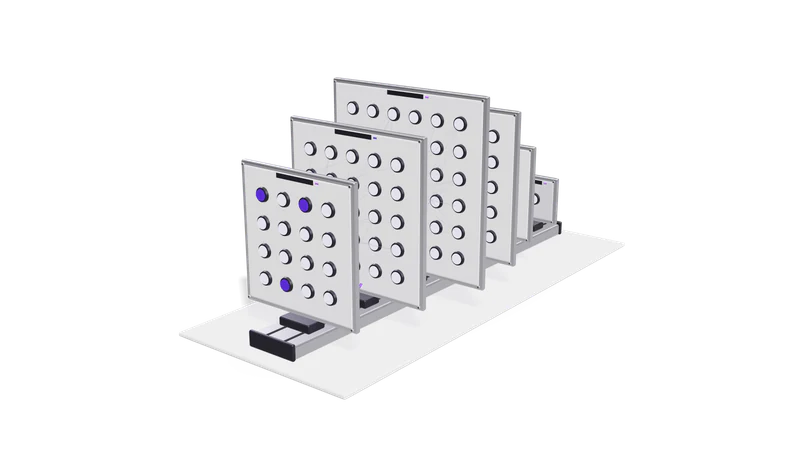
3D render of matte panels of neural network nodes, with activations lighting up layer by layer

From brief to approved cut

We test whether chained video, image, voice and music generators plus editing automation produce business videos a client signs off, at a quotable cost.

Read more about From brief to approved cut

Can a pipeline of video, image, voice and music generators plus automated editing produce short business videos that a client accepts, with a cost and turnaround we can quote in advance?

A single text-to-video model gives you a few seconds of footage. A usable ad, product explainer or social clip needs a script, a shot list, consistent characters or products across shots, a voiceover, music, captions, brand colours and a final edit. Each step can be generated or automated, and each step can fail in its own way.

Our internal tooling, which grew out of our Vibe Editor and AI Mini Studio projects, already chains generated video, images, voice and music with editing automation. This track tests that chain systematically, and the findings shape our generative video and image studio retainers.

What a business needs from it

Video demand outruns shoot budgets

Weekly reels, Shorts and ads outpace shoot budgets; generated footage can fill the gap if quality holds.

Read more about Video demand outruns shoot budgets

Reels, Shorts, product pages and ads all want fresh video every week. A small business cannot book a shoot for each one. Generated footage can fill the gap if the quality holds.
Cost per finished second, not per clip

What matters is the cost of an approved second, rejected clips included.

Read more about Cost per finished second, not per clip

Generators are priced per clip or per second, but many clips get thrown away. The number that matters to a client is what a finished, approved second of video costs, including the rejects.

Rights and disclosure

Model licences differ and platforms ask for disclosure, so each shot's model must be tracked.

Read more about Rights and disclosure

Each model has its own licence terms for commercial use, and platforms such as YouTube ask creators to disclose realistic altered or synthetic content. A pipeline has to track which model made which shot.

Brand safety

Wrong logos, garbled text and extra fingers must be caught before posting.

Read more about Brand safety

Generated video can produce wrong logos, garbled on-screen text, extra fingers or a product that looks subtly different from the real one. Someone has to catch that before it is posted.

Pipeline rig

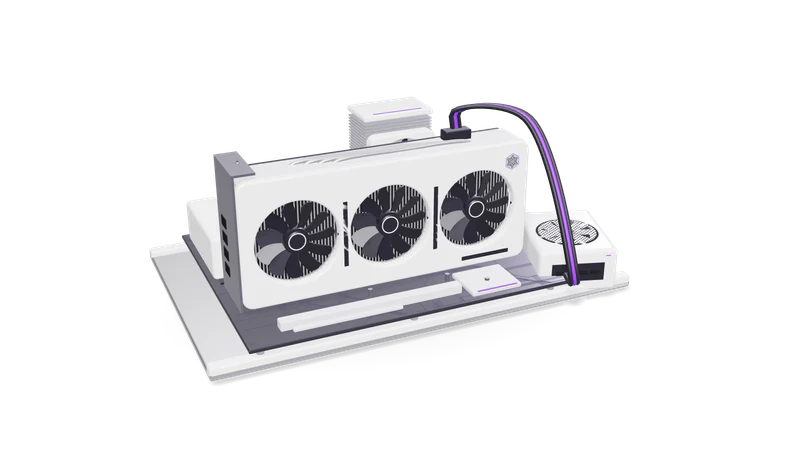
Local work runs on the lab GPU. Heavier video models run through hosted generation services, called from our own tooling, which logs the credits each generation spends.

Fig. 01 GPU test bench used for sizing and benchmarks
Video pipeline rigLabs track 02
Local GPU
NVIDIA GeForce RTX 3070 Ti Laptop GPU, 8 GB
Generated media
Video, still images, voice, music
Orchestration
Internal tooling from Vibe Editor and AI Mini Studio
Cost tracking
Credit ledger per generation call
Editing
Automated assembly, captions and audio mix, then human review
Local candidates
Open video and image models run through node graphs such as ComfyUI; Real-ESRGAN for upscaling
Stage
Pipeline in internal use; test briefs not yet scored in public

Scoring a cut

Every test starts from a written brief, the same way a client job would, and ends with a reviewer deciding whether the cut is usable.

MetricHow we measure itWhat counts as success
Keep rateGenerations attempted for each shot that makes the final cutFew enough retries that the shot cost is predictable
Cost per finished secondCredits from the ledger, including rejected takes, divided by final runtimeA figure we can quote before the job starts
Wall-clock turnaroundTime from approved brief to reviewable cut, with machine time and human time logged apartFits a weekly content calendar
Prompt adherenceReviewer scores each shot against the shot list on a fixed rubricShows what was asked, with no invented objects
Consistency across shotsSame character, product or set checked side by side across every shotA viewer would not notice it was generated shot by shot
ArtefactsChecklist: hands, faces, on-screen text, logos, flicker, warpingNothing on the checklist visible at normal playback speed
Audio fitVoiceover timing against cuts, music level under speech, pronunciation of namesNo re-record needed

Brief types in the test set: a 15 second product ad, a 45 second explainer with voiceover, and a captioned social clip in vertical format.

Known limits and working hypotheses

Public facts first, then the hypotheses we are testing. We have not published our own measurements yet.

8 GB sits right at the edge for open video models

Wan 2.1's smaller model needs 8.19 GB, just above our card, so local runs need offloading or quantization.

Read more about 8 GB sits right at the edge for open video models

The authors of Wan 2.1 state their smaller 1.3 billion parameter text-to-video model needs 8.19 GB of VRAM and makes a 5 second 480p clip in about 4 minutes on an RTX 4090. Our 8 GB card is just below that line, so local video generation will need offloading or quantization, and will be slower.

Clips are short, so editing does the storytelling

Generators make seconds of footage, so editing many shots tells the story.

Read more about Clips are short, so editing does the storytelling

Current generators produce clips of seconds, not minutes. Anything longer is an edit of many shots, which is why the editing automation matters as much as the generator.

Hypothesis: consistency is the main cost driver

Hypothesis: most rejects come from characters or products drifting between shots.

Read more about Hypothesis: consistency is the main cost driver

We expect most rejected takes to come from a character or product drifting between shots, not from single-shot quality. Reference images and fixed seeds should help; we are measuring how much.

Hypothesis: text belongs in the edit, not the generation

Hypothesis: adding titles and captions in the edit removes garbled on-screen text.

Read more about Hypothesis: text belongs in the edit, not the generation

On-screen text generated inside video is often garbled. Adding titles, prices and captions in the editing step should remove a whole class of rejects.

Run plan

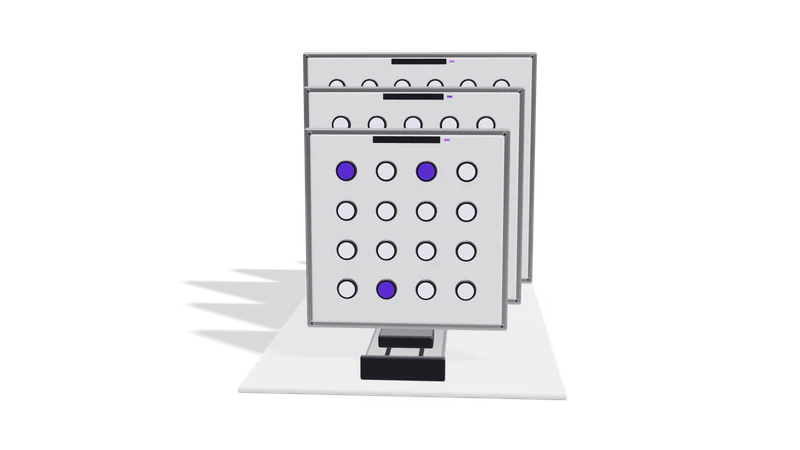
Fig. 02 Face on: nodes lighting up in the first layer, later layers behind
  1. 01 Run the three brief types end to end

    Log every generation, retry and credit for three briefs, then score the cuts.

    Read more about Run the three brief types end to end

    Log every generation, retry and credit for each brief, then score the cuts with the rubric above.

  2. 02 Compare local and hosted for stills and upscaling

    Measure where stills and upscaling on the 8 GB card save cost without slowing delivery.

    Read more about Compare local and hosted for stills and upscaling

    Images and upscaling fit on the 8 GB card far more easily than video. We will measure where local work saves cost without slowing delivery.

  3. 03 Add voice from the voice AI track

    Voiceover and pronunciation tests, including Indian names, come from the voice AI track.

    Read more about Add voice from the voice AI track

    Voiceover quality and pronunciation tests come from our voice AI research, including Indian names and brand terms.

What we publish, and when

Notes will be published in the R&D / Labs notes section of our blog. Sample frames are published only from our own test briefs, never from client work.

NotePublished whenWhat it contains
Method noteBefore any scored cutThe three brief types, the review rubric, the artefact checklist and how cost per finished second is counted
Brief write-upsWhen each brief type has been run end to endGenerations attempted per kept shot, credits spent including rejects, turnaround split into machine and human time, and the rubric scores, with model names and versions
Local versus hostedAfter the stills and upscaling comparisonTime and cost per image and per upscaled clip on the 8 GB card against the hosted service, same inputs
Cost modelOnce at least three briefs per type are loggedThe method for estimating cost per finished second for a new brief, with the ledger data it was fitted on

Questions

Can AI make a complete ad from a text prompt?

Not in one step. Generators make short clips. A finished ad needs a script, consistent shots, voice, music, captions and an edit. Our pipeline automates those steps and a person reviews the cut before it goes out.

Can I use AI generated video commercially?

It depends on each model's licence and on the platform's rules. Some open models allow commercial use, some do not, and platforms such as YouTube ask for disclosure of realistic synthetic content. We track which model made each shot so this can be checked.

Do you sell this as software?

No. Video generation and editing automation is offered as a service on retainer through our generative video and image studio. This lab track is where we test the methods.

Can I schedule the finished videos automatically?

Yes. Finished cuts can go straight into Cybe Social, our scheduler, which posts one upload to every connected account.

Last updated