CyberFreezeDev Loading
  1. Home
  2. AI glossary
  3. Temperature

What is temperature in an LLM?

A setting that makes a model's output more focused when low, more varied when high.

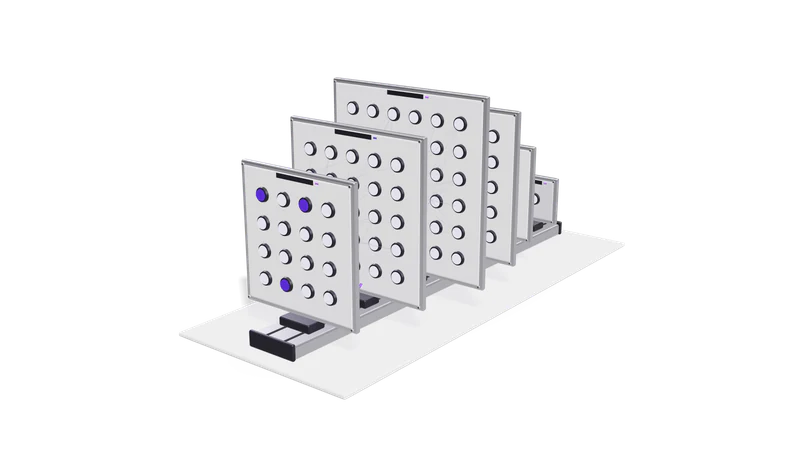
3D render of matte panels of neural network nodes, with activations lighting up layer by layer

Definition

Temperature sharpens or flattens the odds of each next token. Low gives focused, consistent output; higher gives variety and more risk of wandering.

Read more about Definition

A large language model writes one token at a time. For each step it produces a score for every possible next token, and those scores are turned into probabilities. Temperature changes how sharp that probability distribution is before a token is picked.

  • Low temperature (near 0): the most likely token almost always wins. Output is focused and consistent.
  • Higher temperature: less likely tokens get a real chance. Output is more varied, and more likely to wander or make things up.

How it works

Raw scores are divided by the temperature before becoming probabilities. Top-p and top-k also shape choices, and providers accept different ranges.

Read more about How it works

Technically, the model's raw scores (logits) are divided by the temperature before the softmax function turns them into probabilities. Dividing by a number below 1 stretches the gaps between scores, so the top choice dominates. Dividing by a number above 1 shrinks the gaps, flattening the distribution.

Temperature often works alongside top-p (nucleus sampling, which keeps only the smallest set of tokens whose probabilities add up to p) and top-k (keep only the k most likely tokens). Providers set different ranges: OpenAI's API accepts 0 to 2, while Anthropic's API accepts 0 to 1. Some reasoning models fix the value or ignore it, so check the documentation for the model you use.

Where it matters in business

TaskTypical settingWhy
Extracting fields from invoices or formsLow, near 0You want the same answer every time, not variety.
Classifying and routing messagesLowConsistency makes results testable.
Customer support repliesLow to moderateNatural wording, but no improvisation on facts.
Ad copy, headlines, brainstormingModerate to higherVariety is the point; a person picks the best.

Starting points only. Test settings against your own examples.

A practical example

One model, two settings: invoice extraction runs at temperature 0, while subject line drafting runs higher and asks for five options.

Read more about A practical example

A team uses one model for two jobs. The workflow that reads GST invoices and fills a JSON object runs at temperature 0 with a fixed schema. The workflow that drafts five subject lines for a marketing email runs at a higher temperature and asks for five options in one call. Same model, two settings, two very different behaviours.

Common mistakes

Raising temperature to fix bad answers

Higher temperature adds variety, not accuracy. Fix the prompt, data or retrieval instead.

Read more about Raising temperature to fix bad answers

If answers are wrong, fix the prompt, the data or the retrieval. Higher temperature adds variety, not accuracy, and increases the risk of hallucination.

Assuming 0 means perfectly repeatable

Even at 0, hosted models can vary slightly. Do not expect identical output.

Read more about Assuming 0 means perfectly repeatable

Even at 0, hosted models can give slightly different outputs because of how requests are batched and computed. Do not rely on byte-identical output.

Tuning temperature and top-p together blindly

Change temperature or top-p one at a time, and test each change.

Read more about Tuning temperature and top-p together blindly

Change one at a time, and test each change.

Questions

What temperature should I use?

Use a low value for extraction, classification and anything with a right answer. Use a moderate value for natural replies and a higher one for creative options. Then test on real examples.

Does temperature 0 stop hallucinations?

No. It makes the model pick its most likely answer, but the most likely answer can still be wrong. Grounding with retrieval-augmented generation and validation does more.

What is the difference between temperature and top-p?

Temperature reshapes all probabilities. Top-p cuts off the unlikely tail and samples only from the most probable tokens. Both control randomness from different angles.

Last updated