CyberFreezeDev Loading
  1. Home
  2. Comparisons
  3. Custom CRM vs off the shelf

Custom CRM vs off the shelf: build, buy, or buy and connect

Buy, connect or build: how to tell which CRM route fits your team.

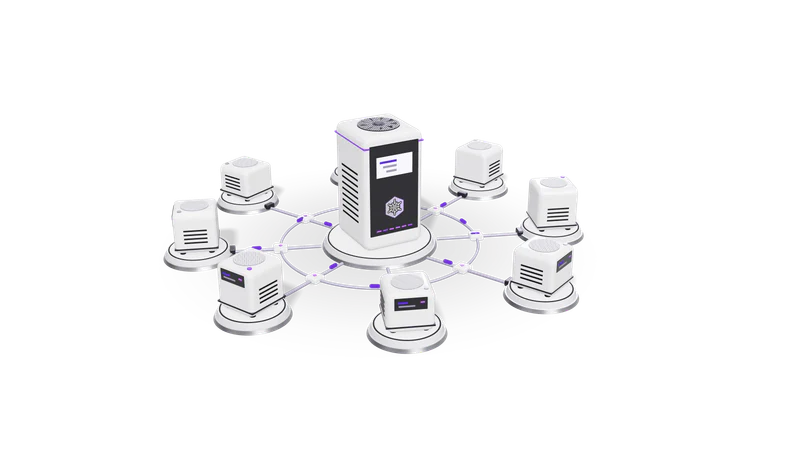
3D render of small AI agent units on plinths, cabled to a central orchestrator unit

The short answer

Buy when your sales process is typical, connect when only the edges differ, and build when the core record is not a deal.

Read more about The short answer

Buy an off-the-shelf CRM when your sales process looks like most sales processes: leads come in, someone qualifies them, deals move through stages, and you want reports. That covers most businesses.

Buy and connect when the CRM fits but the edges do not: leads arrive on WhatsApp, invoices are raised in Tally or another tool, site visits or appointments need booking. A few integrations close the gap at a fraction of the cost of a build.

Build when the core record is not a deal at all, for example a property unit moving through booking and payment stages, a patient episode, or a shipment, and forcing it into a sales pipeline would mean fighting the software every day.

A disclosure: we sell our own CRM, Desk, and we also build custom systems and integrations. We have tried to write this so the advice holds whichever you choose.

Side by side

Compared onOff-the-shelf CRMCustom CRM
Time to startDays to a few weeks of setupWeeks to months of build
Up-front costLow: setup and data importHigh: design, build and testing
Running costPer-user subscriptionHosting, maintenance and changes
Fit to your processYou adapt to its model, within its custom fieldsBuilt around your records and stages
IntegrationsIts marketplace and API; gaps filled with tools such as n8nWhatever you build
New featuresArrive from the vendor, whether you want them or notOnly what you pay for
Data ownershipYours, held by the vendor; check export and residency termsYours, on infrastructure you choose
Main riskWorkarounds pile up until nobody trusts the dataThe system depends on whoever maintains it

Count the cost over three years

Compare three-year totals, including integrations, maintenance, workaround time and the risk of a custom system nobody can change.

Read more about Count the cost over three years

Compare the two over three years, not the first month. For off the shelf: subscription per user times users times 36, plus setup, plus the integrations you will still need. For custom: the build, plus hosting, plus a realistic maintenance budget each year for fixes, security updates and the changes every business asks for once people use the system.

Two costs are often missed. On the off-the-shelf side, the time staff spend on workarounds and double entry when the CRM does not fit. On the custom side, the risk of the system becoming hard to change when the person who built it moves on. Ask any vendor, including us, for documentation, access to the code and a handover plan before you sign.

Our free AI automation ROI calculator helps put a value on the hours a better fit would save.

Signs you need a custom build

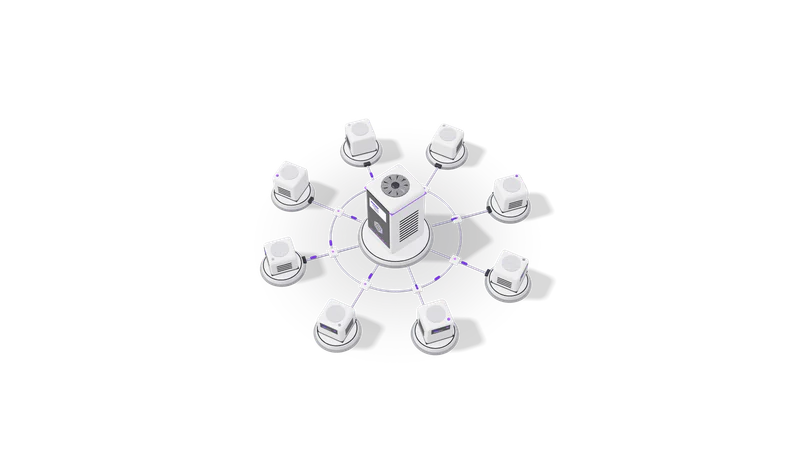
Fig. 01 High angle: each agent unit cabled to the orchestrator

The core record is not a deal

Units, policies, patients or shipments with their own stages, where the sale is only the start.

Read more about The core record is not a deal

Units, policies, patients, students or shipments with their own stages and documents, where the sale is only the start.

Rules a CRM cannot express

Partner credit, allocation or approval chains that would need dozens of fragile automations.

Read more about Rules a CRM cannot express

Channel partner credit, allocation rules or approval chains that would need dozens of fragile automations to imitate.

Data that must stay with you

Legal or regulator requirements that a hosted CRM's terms cannot meet.

Read more about Data that must stay with you

Requirements under the DPDP Act 2023, UK GDPR or a sector regulator that a hosted CRM's terms cannot meet.

Heavy integration both ways

When the CRM is really a front end over your ERP or accounting system.

Read more about Heavy integration both ways

When the CRM is really a front end over your ERP, accounting or operations system, building it around that system can be simpler than syncing two databases.

Signs you do not

The pain is data entry

Feed leads in automatically from WhatsApp, forms and email instead of rebuilding.

Read more about The pain is data entry

If reps hate typing leads in, the fix is capture: WhatsApp, forms and email feeding the CRM automatically. See our WhatsApp CRM automation service.

The pain is reporting

A dashboard over the CRM's existing data costs less than a new CRM.

Read more about The pain is reporting

If managers cannot see the pipeline, a dashboard over the CRM's data is cheaper than a new CRM. See marketing intelligence dashboards.

Nobody uses the current one

A custom system will not fix adoption; start simpler with fewer required fields.

Read more about Nobody uses the current one

A custom system will not fix adoption. Start with a simpler setup and fewer required fields.

The middle path

Most often we set up a standard CRM around your real stages, with WhatsApp and website capture and a few n8n integrations you can change.

Read more about The middle path

What we build most often is neither extreme: a standard CRM, set up around the team's real stages, with leads captured from WhatsApp and the website, follow-ups scheduled, and the handful of integrations that matter, usually built in n8n so the client can see and change them. When a team uses Desk, its CRM and project sides share one login, so a won deal can become delivery work without a second system; when a team uses another CRM, we connect to it through its API.

For real estate developers, where the unit and its payment stages are the core record, see our real estate page. For a fully custom system, see web engineering and custom AI systems.

Questions

Is a custom CRM cheaper in the long run?

Sometimes, for larger teams with stable needs, because there are no per-user fees. For small teams it is usually more expensive once maintenance and changes are counted over three years.

Can we start off the shelf and move to custom later?

Yes, and it is often the right order: the off-the-shelf phase teaches you which fields and stages you really use. Make sure the CRM lets you export all your data, including activity history.

Do you only recommend Desk?

No. Desk is our product and suits teams that want CRM and projects in one login. If you already run another CRM that fits, we connect to it rather than replace it.

Last updated