CyberFreezeDev Loading
  1. Home
  2. AI glossary
  3. Synthetic data

What is synthetic data?

Data made up on purpose to test and train AI without exposing real customers.

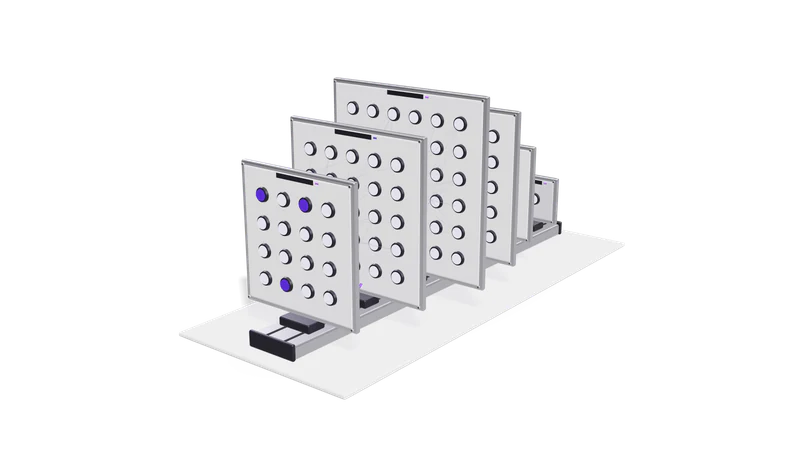
3D render of matte panels of neural network nodes, with activations lighting up layer by layer

Definition

Program-made data that mimics real data where it matters: same fields, similar patterns, realistic edge cases. It can be rows, text, documents or images.

Read more about Definition

Synthetic data is data produced by a program or model instead of being collected from real events. It is designed to look and behave like real data in the ways that matter for a task: the same fields and formats, similar distributions, realistic edge cases.

It can be structured (rows of fake transactions), text (sample customer emails, generated with a large language model), documents (invoices with random but valid-looking GSTINs and amounts) or images (product photos rendered from 3D models or produced with a diffusion model).

How it is generated

Rules and templates

Scripts fill templates with random values within real limits; simple and predictable.

Read more about Rules and templates

Scripts that fill templates with random values within real constraints. Simple, predictable and good for testing software.

Statistical models

Models fitted to real data sample new rows with similar patterns.

Read more about Statistical models

Models fitted to real data that sample new rows with similar distributions and correlations.

Generative AI

LLMs write varied text; image models and 3D rendering produce labelled pictures.

Read more about Generative AI

LLMs write varied text examples; image models create pictures; 3D rendering creates labelled images with perfect ground truth.

Where it matters in business

Testing without real customer data

Developers and vendors work on realistic records instead of real customer data.

Read more about Testing without real customer data

Developers and vendors work on realistic records, which reduces exposure under the DPDP Act 2023 and UK GDPR.

Rare cases

Generated fraud, defect or odd layout examples give a model enough to learn from.

Read more about Rare cases

Fraud, defects and unusual document layouts are rare in real data. Synthetic examples give the model enough to learn from.

Evaluation sets

Generated questions with known answers make repeatable chatbot tests.

Read more about Evaluation sets

Generated questions with known answers make a repeatable model evaluation for a chatbot.

Training smaller models

A large model's outputs become training data for a small one.

Read more about Training smaller models

Outputs from a large model become training data for a small one, as in model distillation.

A practical example

With only forty real invoices, a team generated thousands in many layouts and fonts, trained on the mix, and tested only on held-back real invoices.

Read more about A practical example

A team building invoice extraction has only forty real invoices from one supplier format. It writes a generator that produces thousands of invoices across many layouts, fonts, scan qualities and languages, with the correct field values recorded for each. The extractor is trained on the mix, then tested only on a held-back set of real invoices, because that is the number that matters.

Common mistakes

Testing on synthetic data only

Scoring well on generated data proves little. Always keep a real test set.

Read more about Testing on synthetic data only

A model can score well on data that shares the generator's quirks and fail on the real thing. Always keep a real test set.

Assuming it is automatically anonymous

Data from a model trained on personal records can leak details. Check for near copies.

Read more about Assuming it is automatically anonymous

Synthetic data made by a model trained on personal records can leak details of real people. Check for near copies before sharing.

Copying the generator's blind spots

If the generator never makes a crumpled scan, the model never learns one.

Read more about Copying the generator's blind spots

If the generator never produces a crumpled scan, the model never learns one. Review samples by hand.

Questions

Is synthetic data as good as real data?

It is a supplement, not a replacement. It works best for filling gaps, testing software and protecting privacy. Final accuracy should always be measured on real data.

Can I use an LLM to generate training data?

Yes, and it is common. Check the model provider's terms, since some restrict using outputs to train competing models, and review samples for repetition and errors.

Does synthetic data remove privacy obligations?

Not automatically. If it can be linked back to a real person it may still be personal data. Generate from rules where possible, and test model-generated data for leaks.

Last updated