CyberFreezeDev Loading
  1. Home
  2. Comparisons
  3. RPA vs AI agents

RPA vs AI agents: screen bots, judgement, or both?

RPA replays clicks on a screen; an AI agent reads, decides and calls tools.

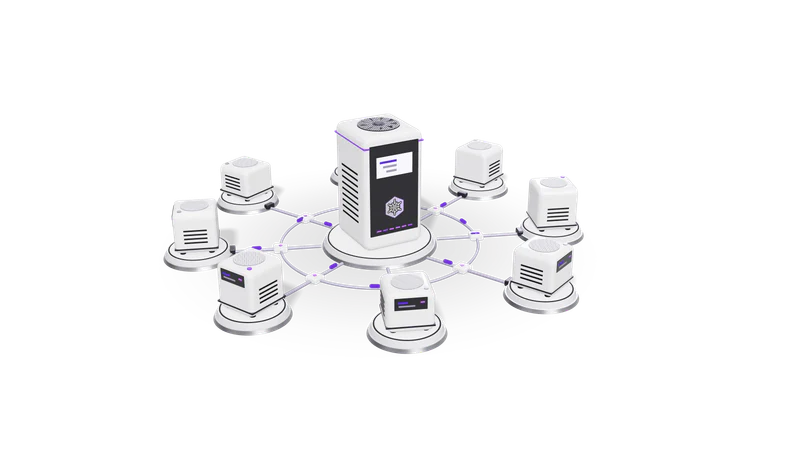
3D render of small AI agent units on plinths, cabled to a central orchestrator unit

The short answer

RPA for stable screens with no API; AI agents for steps that need reading or judgement; plain workflows over APIs for the rest.

Read more about The short answer

Use RPA (robotic process automation) when a step happens inside an application that offers no API, export or email feed, the screens rarely change, and the rules are fixed. The bot types and clicks exactly as a person would.

Use an AI agent when a step needs reading or judgement: understanding an email, pulling fields out of a document that never looks the same twice, or deciding which of several actions comes next. The agent works through tools you give it, and a person approves anything that moves money or reaches a customer.

For everything in between, plain workflow logic over APIs is usually cheaper and sturdier than either. Our business process automation work starts by deciding, step by step, which of the three fits.

Side by side

Compared onRPAAI agent
How it worksReplays recorded or scripted clicks and keystrokes on an application's screenA language model reads the input, plans, and calls tools (APIs, databases, other systems) until the goal is met
Handles unstructured inputNo; needs fixed fields in fixed placesYes; emails, PDFs, chats and scanned forms
Same input, same resultYesUsually, not always; outputs vary and must be checked
What breaks itA moved button, a new screen, a slow page, a changed loginUnclear instructions, missing tools or data, inputs unlike anything tested
UpkeepBots need fixing whenever the screens changePrompts, tools and a test set need maintaining as the process changes
Audit trailLogs of each click and screenLogs of each tool call, the model's reasoning summary and who approved what
Best fitOld desktop or web systems with no API, high volume, fixed rulesReading, classifying, drafting and deciding the next step

Where each one wins

RPA: legacy screens with no way in

Stable legacy screens with no API, export or email feed.

Read more about RPA: legacy screens with no way in

A government portal, an old ERP screen or a bank's corporate site that has no API and no export. If the screens are stable and the steps never vary, a bot is the only practical automation, and it can run every night without a person.
AI agents: anything a person reads first

Documents, emails and chats that need reading before anything can happen.

Read more about AI agents: anything a person reads first

Supplier invoices in twenty layouts, customer emails asking three things at once, WhatsApp enquiries in English and Tamil. An agent, or a simpler model step, turns these into structured data and a proposed action. RPA cannot read them at all.

Plain workflows: when an API exists

Direct API workflows beat screen bots whenever an API exists.

Read more about Plain workflows: when an API exists

If both systems have APIs, a workflow in a tool such as n8n moves the data directly. It is faster than driving a screen, does not break when the interface is redesigned, and costs less per run than a model call.

Together: one process, three kinds of step

AI reads, workflows move data, people decide, bots handle API-less screens.

Read more about Together: one process, three kinds of step

A common pattern: an AI step reads the incoming invoice, a workflow checks it against the purchase order through the accounting system's API, a person approves the exception, and an RPA bot enters the approved payment in a bank portal that has no API. Each tool does only the part it is good at.

Is RPA being replaced by AI agents?

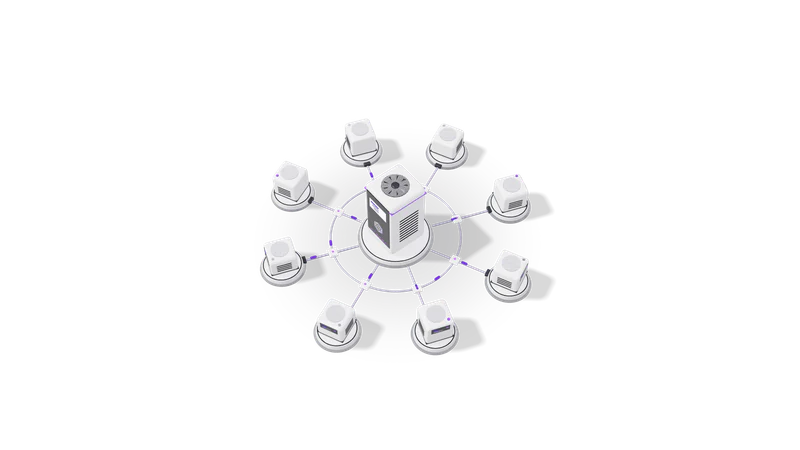
Fig. 01 High angle: each agent unit cabled to the orchestrator

AI takes over the reading and deciding; APIs replace screen bots where possible; RPA stays for screens with no other way in.

Read more about Is RPA being replaced by AI agents?

Partly. Many steps that were automated with screen bots because the input was messy are better done today by a model that reads the input and a workflow that writes the result through an API. Agents also cope with small changes that would stop a bot.

But agents do not remove the need to reach systems that only have a screen, and they add costs RPA does not have: model calls on every run, outputs that vary, and the need for a test set and human approval on anything consequential. The practical answer is to move the reading and deciding steps to AI, move data through APIs wherever they exist, and keep screen bots only for what is left.

Where to go next

Process automation, AI agents and workflow automation services, plus the related comparisons.

Read more about Where to go next

For whole processes, see business process automation. For agents that read, decide and act, see AI agent development. For single workflows such as approvals and data entry, see AI workflow automation. The difference between a fixed workflow and an agent is covered in AI agent vs workflow automation, and RPA itself in what is RPA.

Questions

What is the difference between RPA and AI agents?

RPA repeats fixed clicks and keystrokes on an application's screen. An AI agent uses a language model to read inputs, decide what to do and call tools to do it. RPA needs structured input and stable screens; an agent handles unstructured input and changing situations but needs testing and human approval for consequential actions.

Can RPA and AI agents work together?

Yes, and in larger processes they often should. The agent or a model step reads and decides, a workflow moves data through APIs, a person approves exceptions, and an RPA bot handles only the systems that have no API.

Is RPA cheaper than an AI agent?

Per run, a bot usually costs less because it makes no model calls. Over time, upkeep often decides it: bots need fixing whenever screens change, while agents need their prompts, tools and test set maintained. Where an API exists, a plain workflow is usually cheaper than both.

Do you build RPA bots?

We use screen automation only when a system offers no API, export or email feed, and we say so up front. Most of our automation work runs on APIs and workflow tools such as n8n, with AI steps for reading and judgement and a person approving anything final.

Last updated